
Optimize optical manufacturing decisions — from design to production
Introduction
PanDao helps engineers and decision-makers identify the most cost-efficient way to manufacture optical components.
From early design decisions to supplier selection and production planning, PanDao reveals the optimal fabrication strategy.
- Design optimization based on manufacturability
- Cost-efficient supplier and process selection
- Data-driven production decisions
Use cases
Compare optical designs based on manufacturing cost and risk
PanDao enables direct comparison of optical systems based on manufacturing cost, risk, and required fabrication technologies.
This allows engineers and decision-makers to identify the most cost-efficient design before production and avoid costly design decisions early.
Small design differences can result in significantly higher manufacturing cost.
The following example shows a typical design decision scenario.
Two optical systems achieve the same optical performance (one wave accuracy across the full field).
The left design is fully spherical, while the right design uses an aspherical surface.
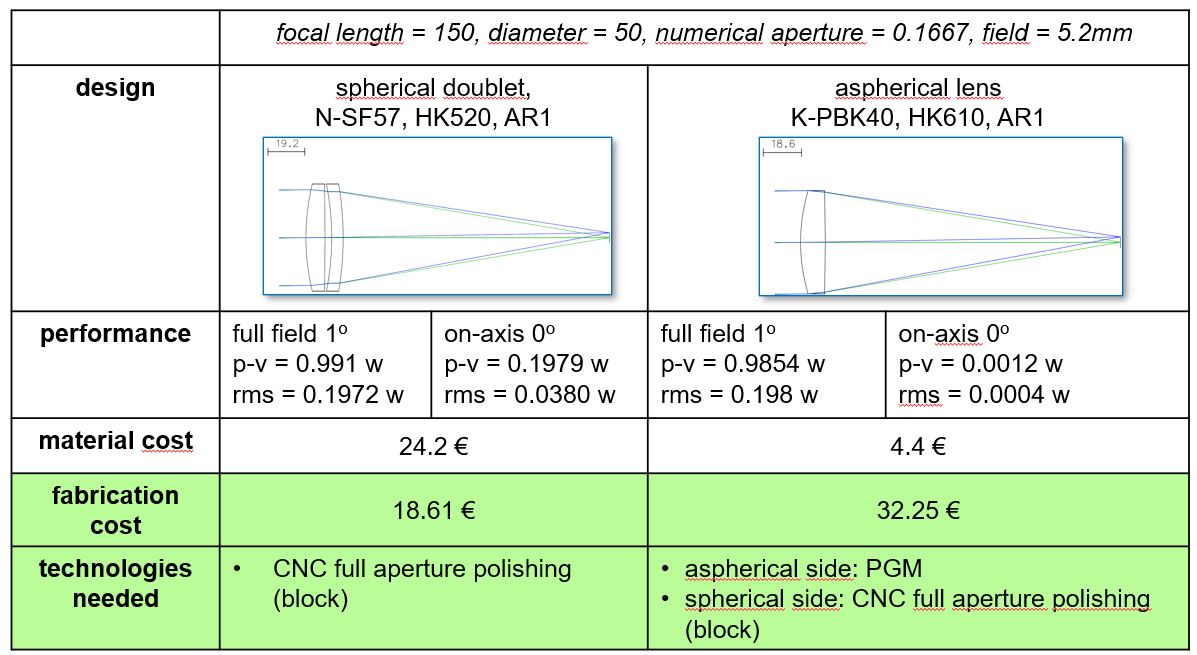
The green lines represent the PanDao analysis results.
For fabrication, the aspherical design is 1.7× more expensive than the spherical design.
When material cost is included, the aspherical solution is only 0.85× the total cost.
For a production volume of 9,000 lenses, this results in potential savings of approximately €50,000 — identified before production starts.
This allows teams to select the optimal design based on both performance and manufacturing cost.
Understand the cost impact of design parameters
PanDao reveals how design parameters directly impact manufacturing cost.
By modifying key parameters, engineers can immediately evaluate cost implications and identify more efficient designs.
The following example shows a typical design optimization scenario.
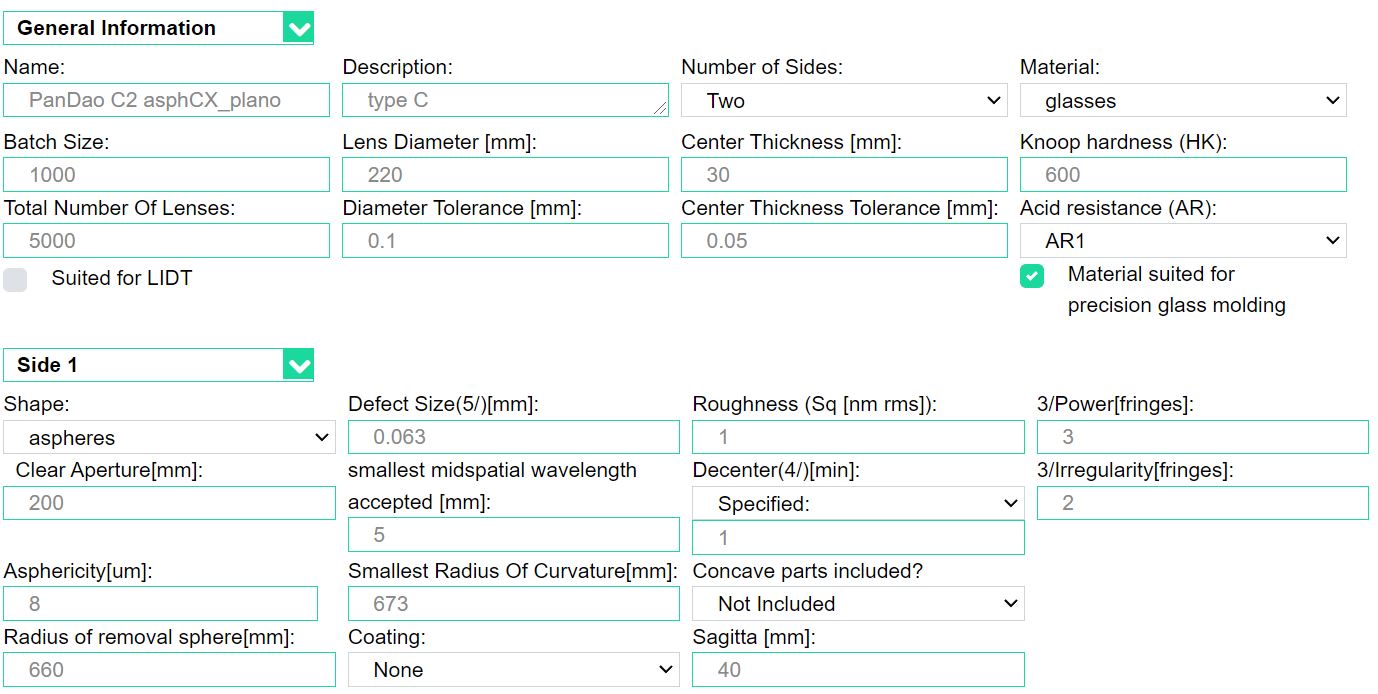
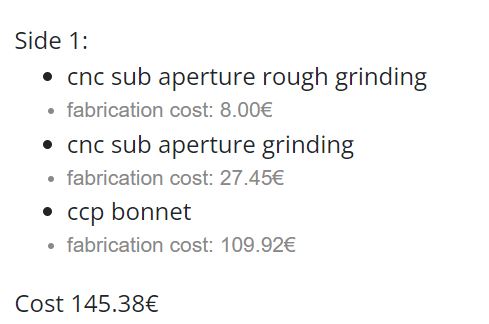
The input is an aspherical lens for imaging. The asphericity of a 220 mm lens is reduced from 12 µm to 8 µm.
fabrication chain for 12 um aphericity
fabrication chain for 8 um asphericity
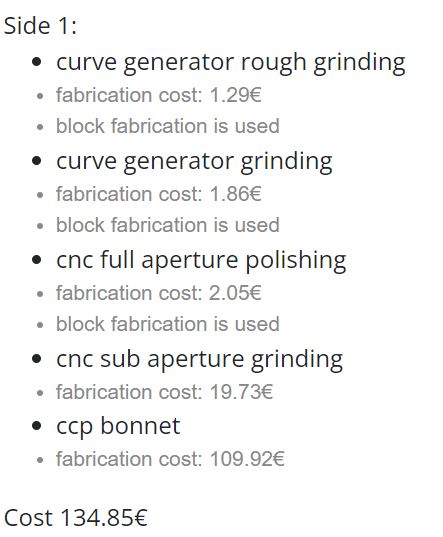
This change reduces fabrication cost by 7.5%, corresponding to €11 per lens.
For a production volume of 5,000 lenses, this results in total savings of €55,000.
Such cost effects are difficult to predict during optical design.
PanDao makes these relationships visible immediately, enabling data-driven design decisions.
Small parameter changes can have a significant impact on manufacturing cost.
Make better supplier decisions based on cost and risk
Selecting the right supplier requires balancing cost, risk, and available manufacturing technologies.
PanDao provides instant insight into the required fabrication processes and expected cost level for a given optical component.
During supplier discussions, PanDao allows you to evaluate manufacturing feasibility and cost implications in real time — even on-site.
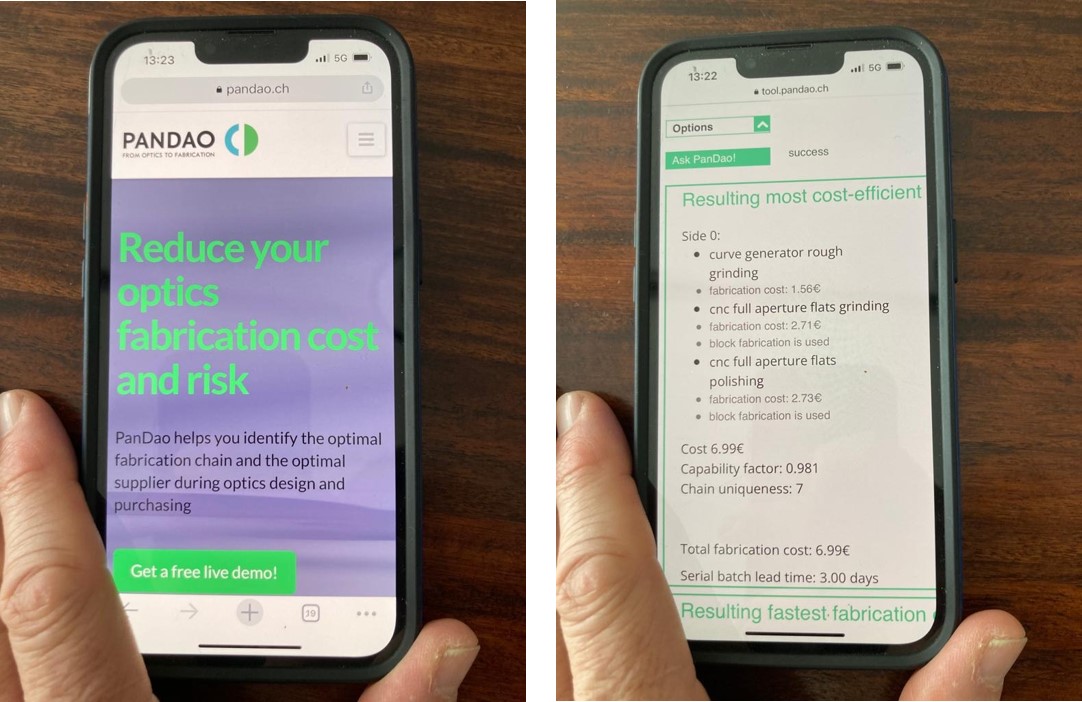
PanDao shows which technologies are required to manufacture a lens and estimates the corresponding cost level.
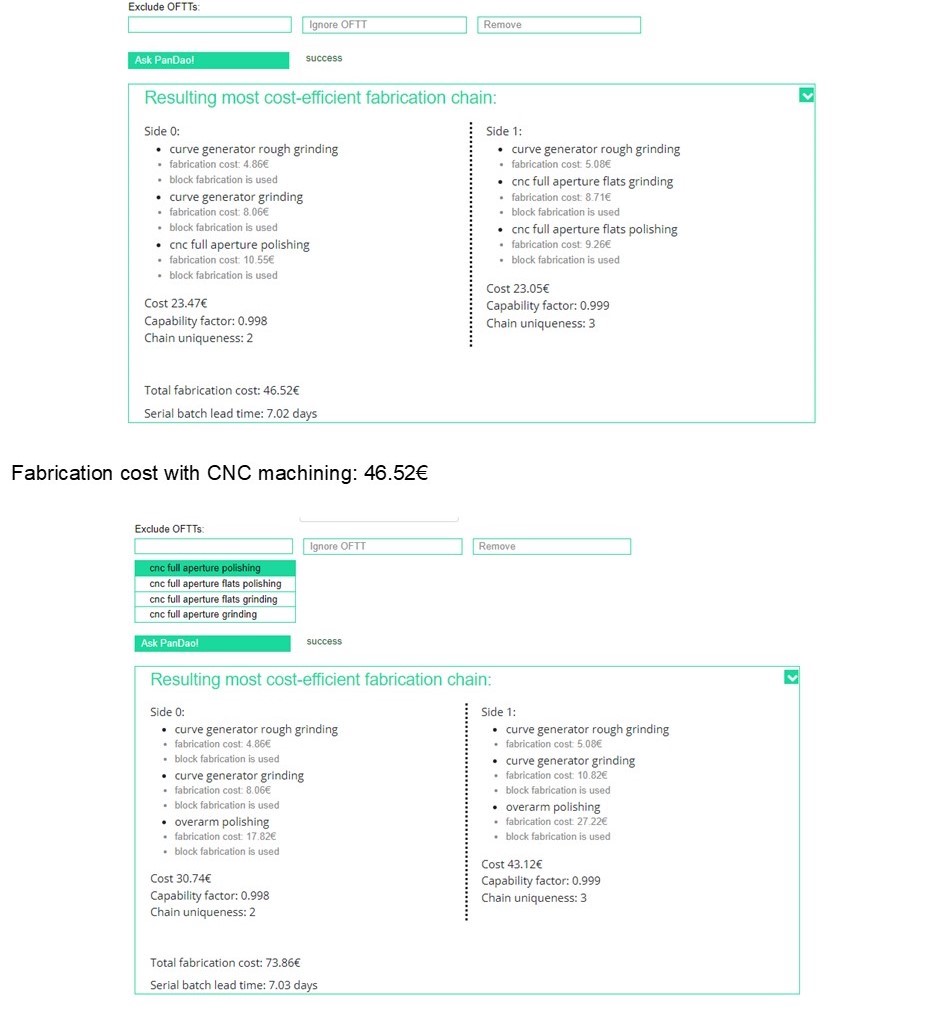
If a supplier does not have the necessary capabilities, PanDao immediately quantifies the resulting cost increase.
The following example shows a typical supplier evaluation scenario.
Certain technologies (e.g. CNC machining) are excluded to reflect limited supplier capabilities.
Minimize fabrication risk and optimize tolerances
PanDao identifies the required fabrication technologies and the optimal process chain for a given optical design.
This allows engineers to reduce fabrication risk and define tolerances based on manufacturing constraints — not assumptions.
In addition, PanDao reveals where tolerances can be tightened without increasing fabrication cost or risk.
This enables more robust designs without unnecessary manufacturing effort.
The following example shows the optimal fabrication chain for an aspherical lens.
Diameter: 50 mm
Material: BK7
Defined tolerances include shape accuracy, centering, surface roughness, and scratch/dig specifications.
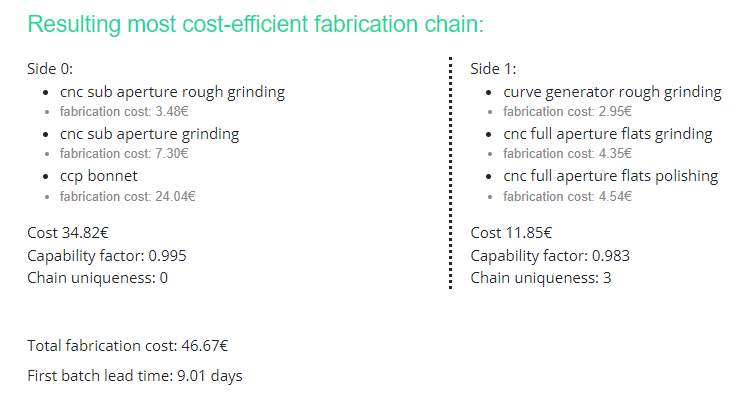
PanDao determines the optimal fabrication chain and the required technologies for this lens.
It also identifies alternative process options with similar cost and risk levels.
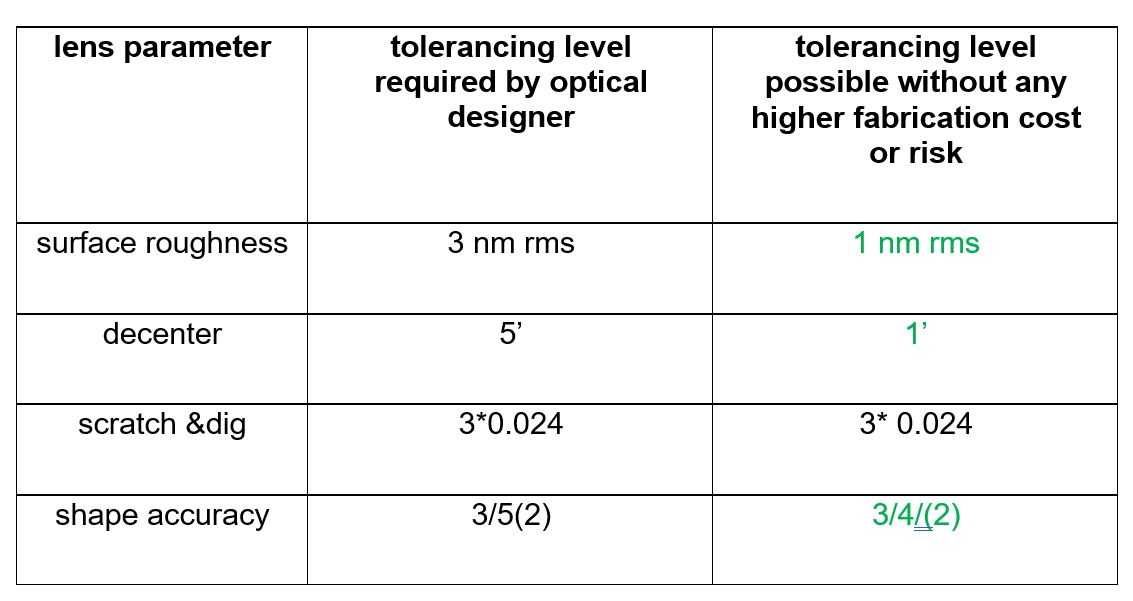
Based on this analysis, PanDao identifies a set of stricter tolerances that can be applied without increasing fabrication cost or risk.
PanDao defines the process window in which cost and fabrication risk remain constant.
Without this insight, tolerances are typically chosen conservatively — or incorrectly.
This reduces over-engineering and prevents unnecessary manufacturing cost.
Evaluate material choices and their cost impact
Material selection has a direct impact on manufacturing cost and process complexity.
PanDao allows you to compare different material options based on their fabrication cost and required technologies.
The following example compares two aspherical lens designs with identical optical performance (Strehl ratio of 0.8).
One design uses a low-refractive-index material (N-BK7) with stronger curvature.
The other uses a high-refractive-index material (N-SF57) with reduced curvature.
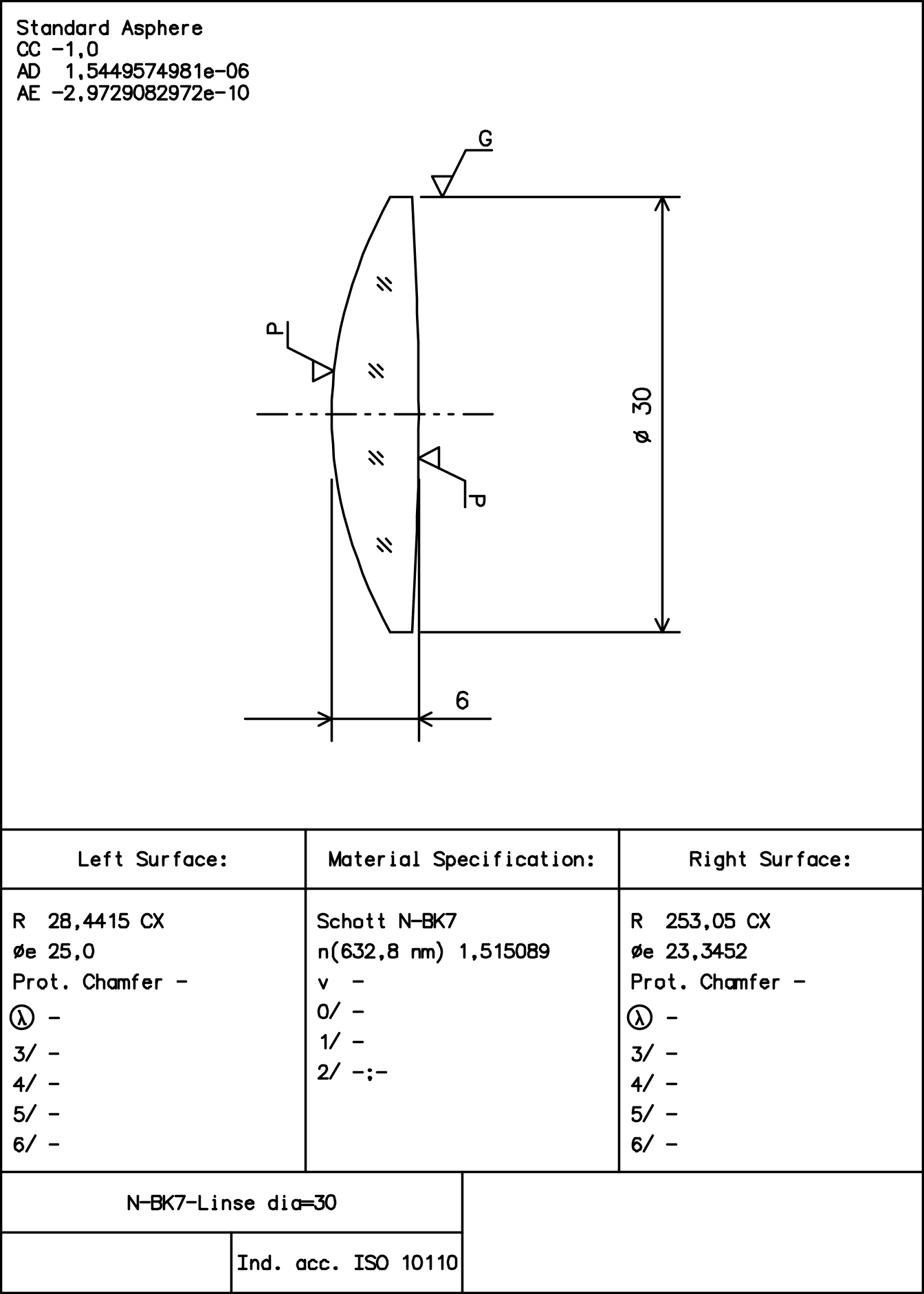

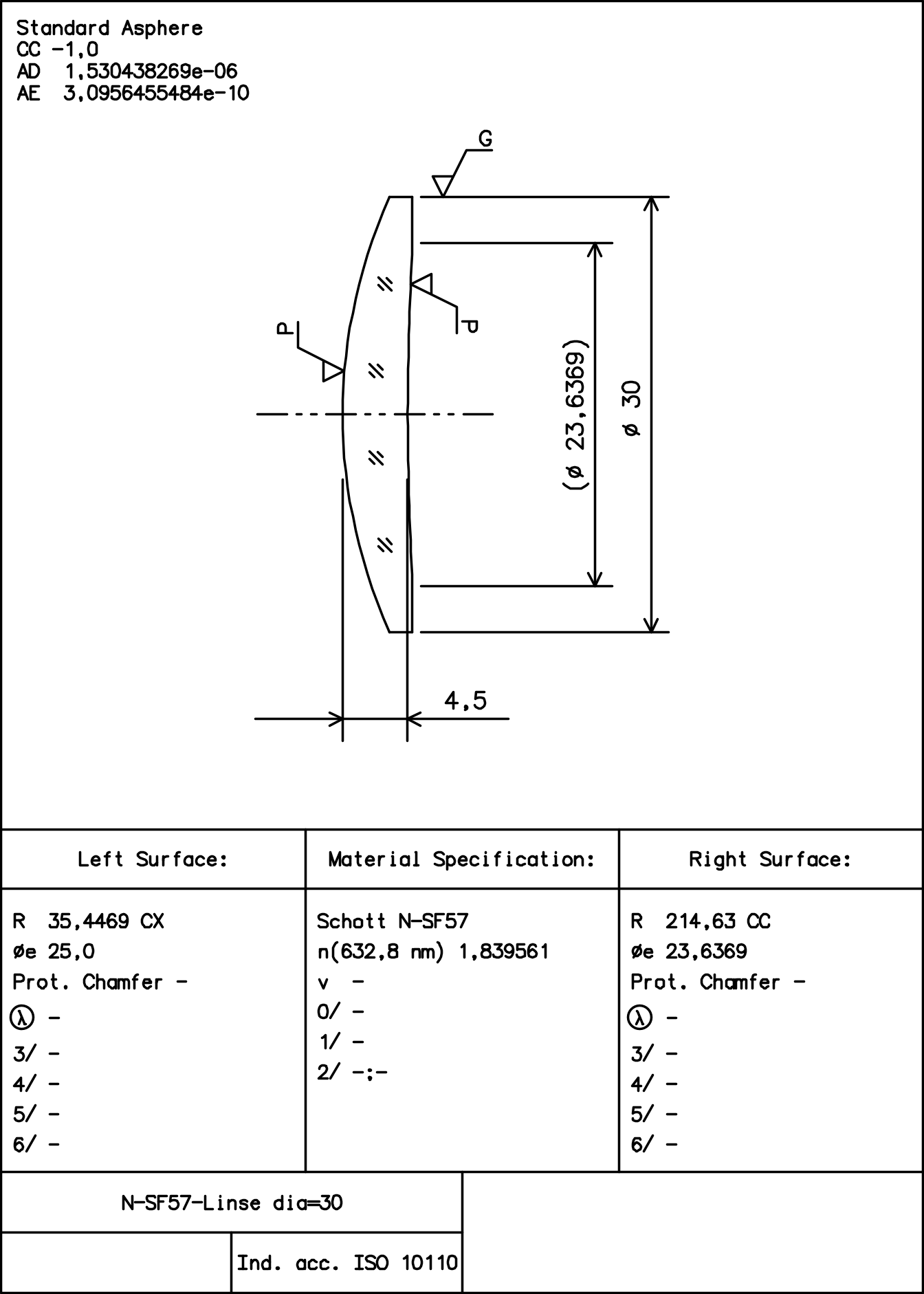
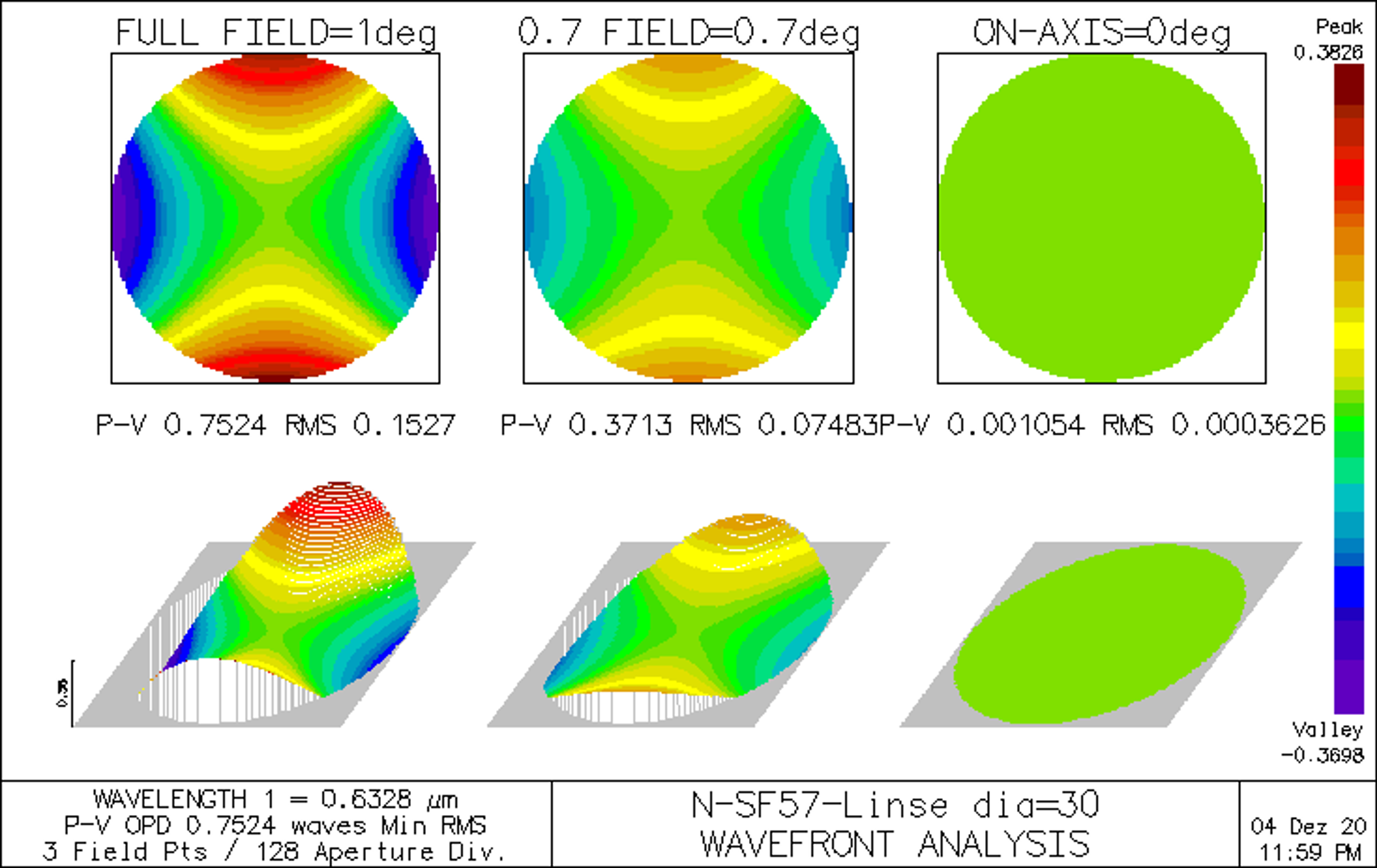
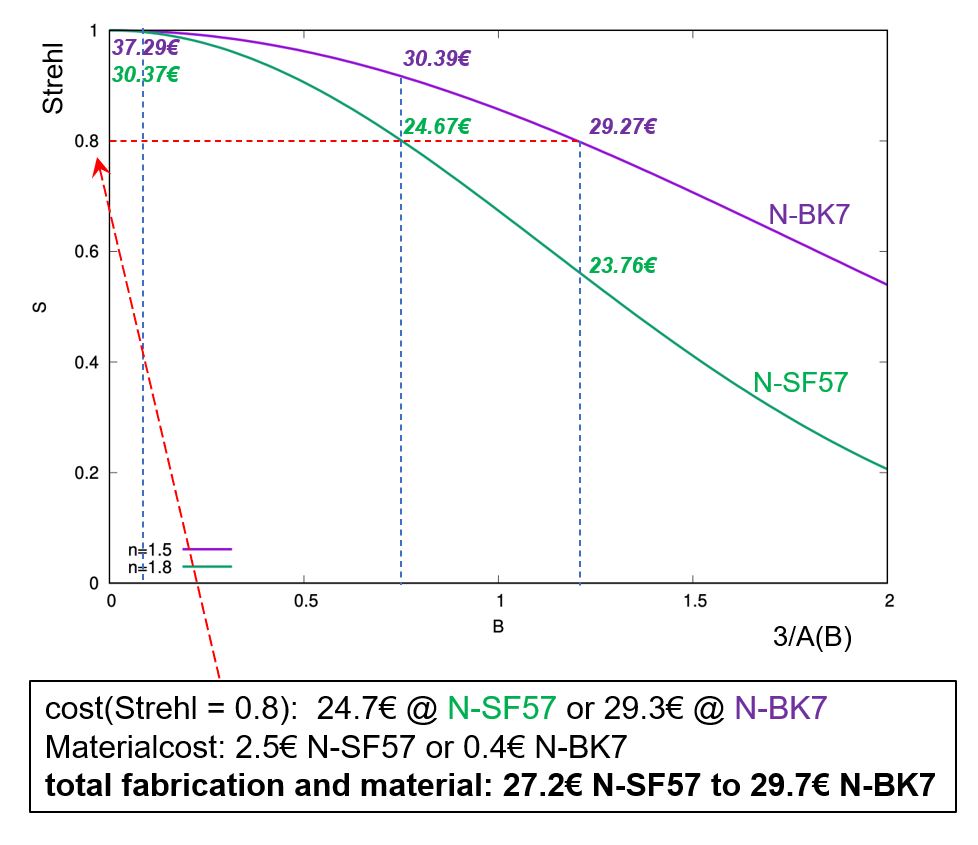
PanDao identifies a fabrication cost difference of €5 per lens, corresponding to 16%.
Although the high-index material is more expensive, the overall manufacturing cost is lower.
For a production volume of 30,000 lenses (e.g. in endoscopic systems), this results in total savings of €63,000.
Such trade-offs are difficult to identify during the design stage.
PanDao makes the impact of material choices immediately visible — reducing development time and overall product cost.
Material choice can reduce cost even when the material itself is more expensive.
Verify manufacturing feasibility and required technologies
Manufacturing feasibility depends on the availability of specific fabrication technologies.
PanDao identifies which technologies are required for a given optical design and whether it can be manufactured with available capabilities.
The following example shows a convex aspherical lens with high accuracy requirements.
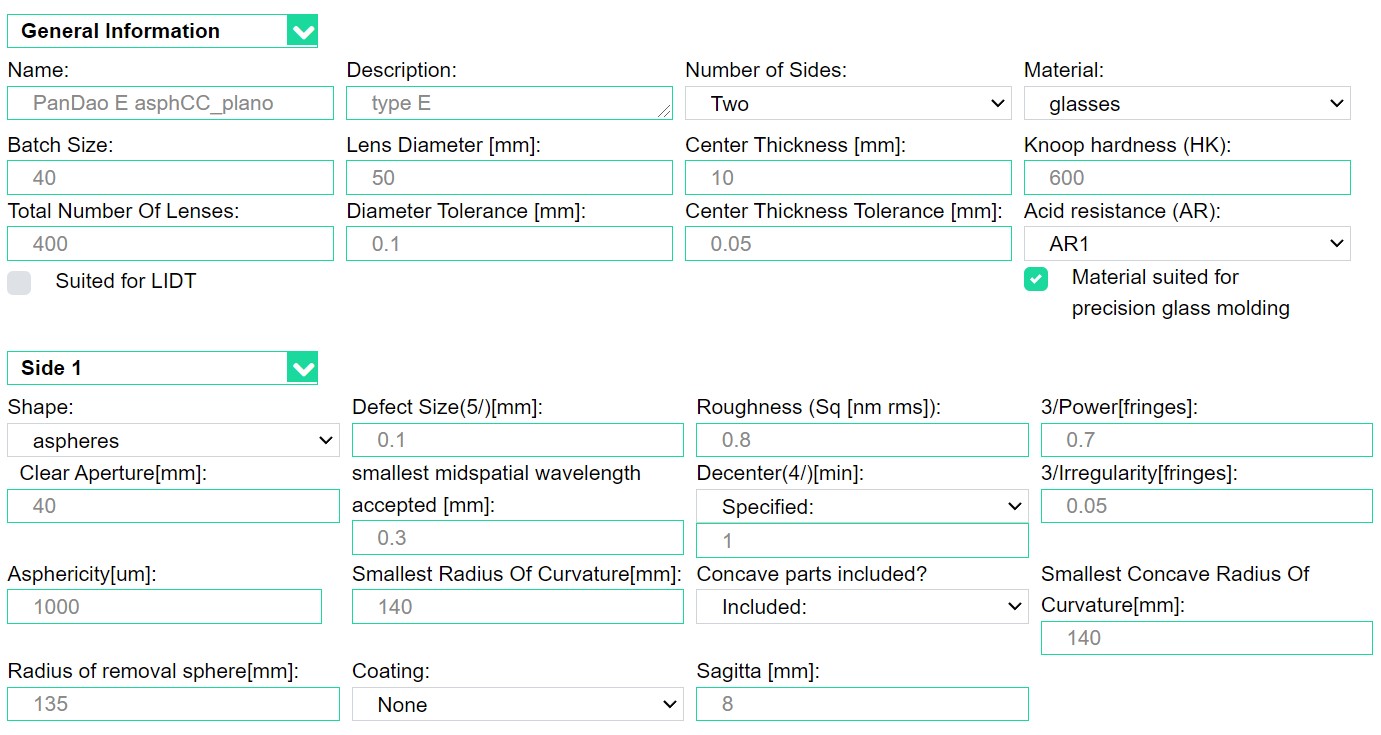
Answer with access to IBF
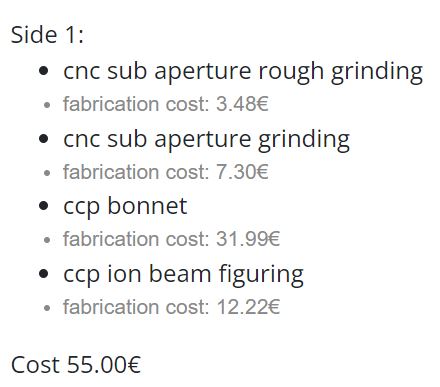
Answer with IBF excluded
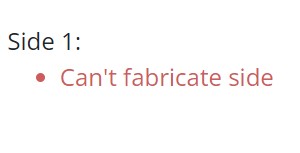
PanDao shows that ion beam figuring (IBF) is the only viable technology to achieve the required specifications.
Without this insight, such constraints are often discovered late in the project — leading to significant cost increases and project delays.
This allows teams to adapt the design early or select suitable manufacturing partners.
Tighten tolerances without increasing cost
The impact of tolerance parameters on manufacturing cost is often difficult to predict.
PanDao allows you to evaluate this relationship instantly.
The following example shows a case where tolerances are tightened while fabrication cost remains unchanged.
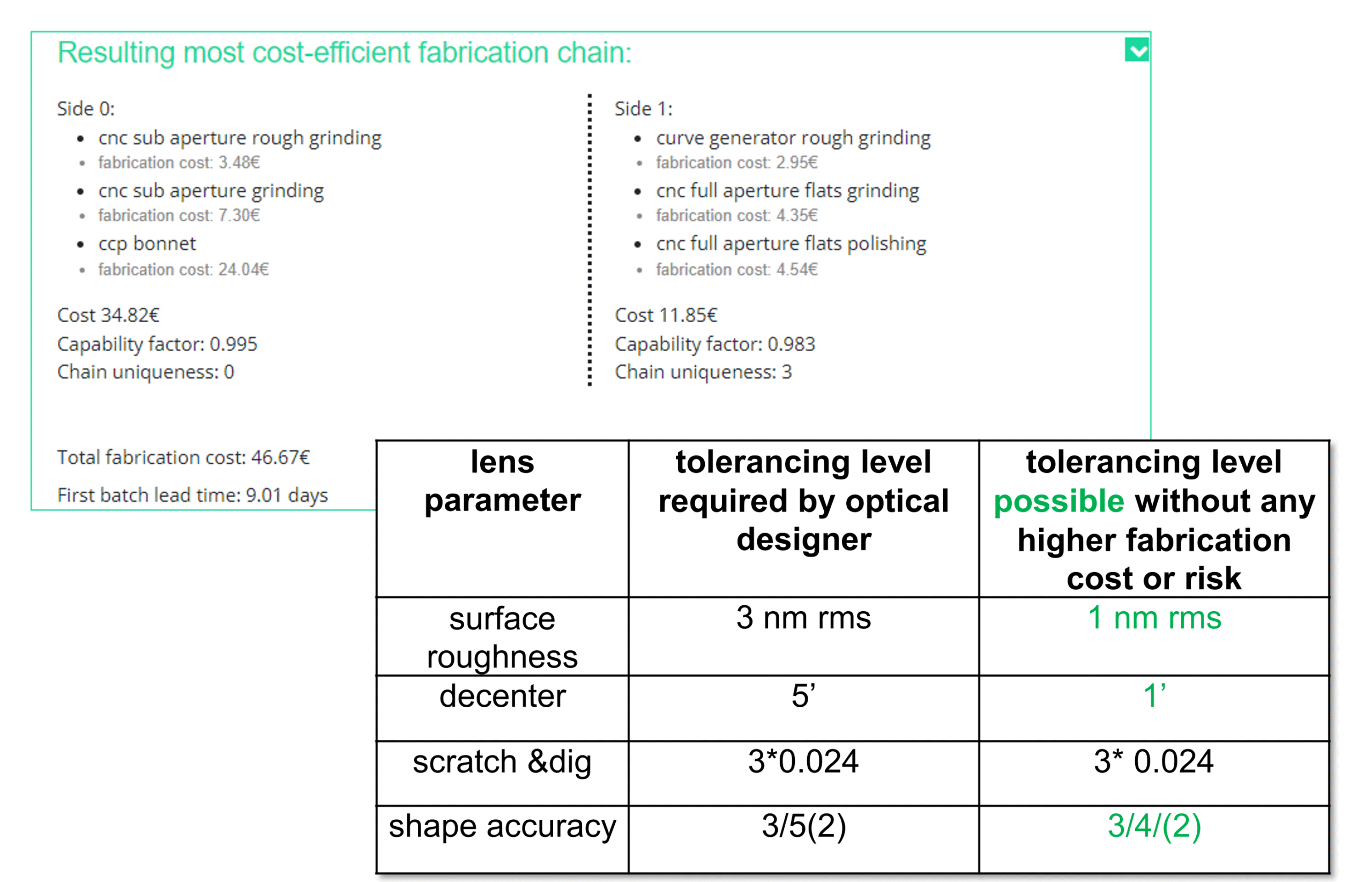
This means that higher precision can be achieved without additional manufacturing cost.
This enables more robust designs without unnecessary over-engineering.